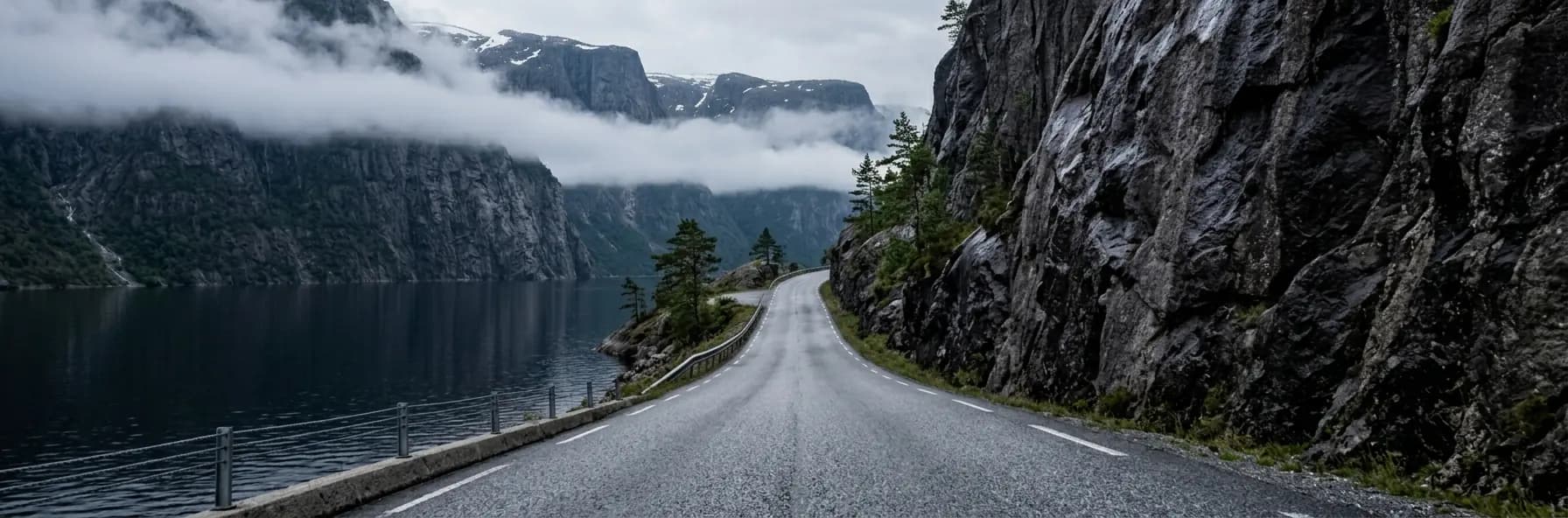
Norway
Drives on the right · NOK · Emergency 112Driving in Norway
Norway has no toll booths. Tolls themselves are everywhere — ringing cities, on bridges, through tunnels — but every one is read from your number plate as you pass, with nothing to stop for and no way to pay at the roadside. For a foreign-registered car this works by invoice: do nothing and the registered keeper is billed afterwards. Registering in advance is cheaper, because it avoids a per-plate lookup fee, and a tag earns roughly 20% off plus a one-hour rule in cities that charges several passes within 60 minutes only once. Hire cars normally have a tag fitted, so the real question is how the rental company rebills you. Several cities, Oslo and Bergen among them, charge diesel vehicles more through environmentally differentiated rates — a low-emission charge in everything but name. The alcohol limit is 0.2‰, among the strictest in Europe, and enforcement generally is strict rather than nominal. Winter tyres are effectively necessary from around November to Easter across most of the country, and chains are worth carrying for mountain routes. Norway sits outside the EU but inside Schengen, and the currency is kroner.
Speed limits
Alcohol limits
Mandatory equipment
- •Warning triangle
- •Hi-vis vest
Winter tires & snow chains
Winter tires (or studded tires, permitted seasonally) are effectively required from around November to Easter given road conditions in most of the country; some regions have more specific signed requirements — carry chains if heading into mountain areas.
Tolls
Extensive electronic, barrier-free tolling nationwide — cameras read your plate and you're billed automatically (via AutoPASS for residents, or a separate billing process for foreign-registered vehicles); there are no toll booths to stop at, but foreign visitors should register or expect a mailed/emailed invoice.
Full motorway tolls guide →More things to know before you drive
Good to know
Not in the EU but in the Schengen area. Currency is the Norwegian krone (NOK), not the euro. The 0.2‰ alcohol limit is one of the strictest in Europe.