Montenegro
Drives on the right · EUR · Emergency 112Driving in Montenegro
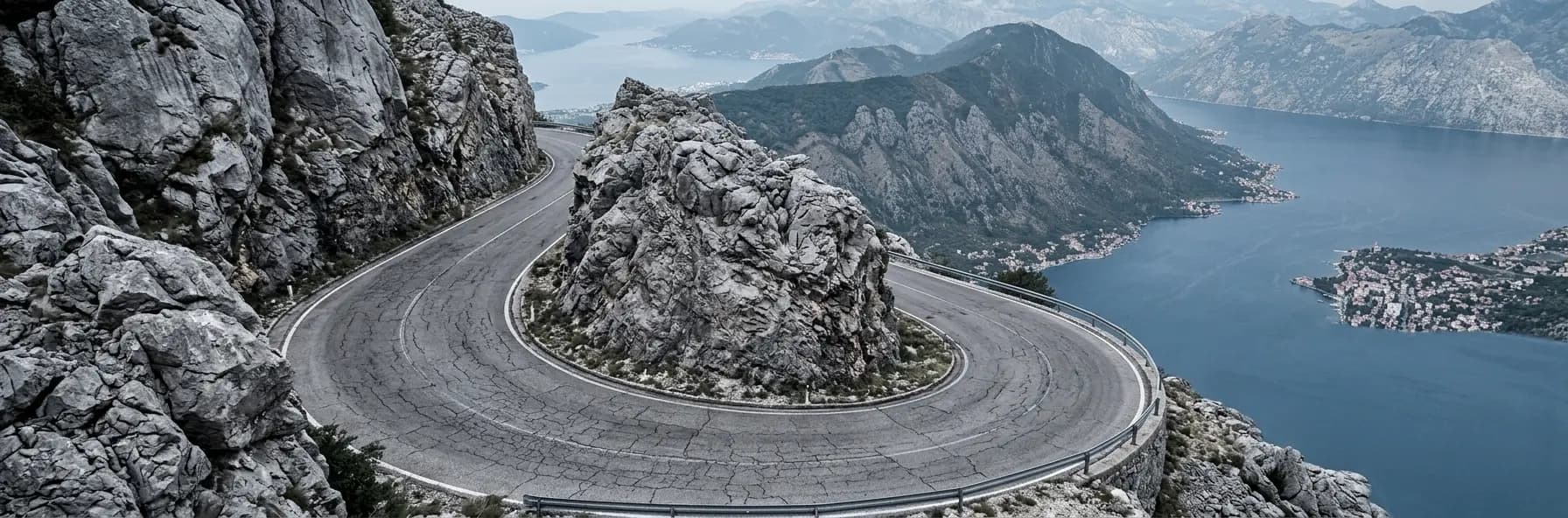
Montenegro is small, mountainous and mostly toll-free, and the driving is more demanding than the rules suggest. Only the newer Bar–Boljare motorway section charges a toll, collected at barriers by cash, card or an electronic tag. Everything else is free — which means most of your driving will be on ordinary roads, and inland those roads are narrow, winding and slow in a way that makes map distances misleading. Allow considerably more time than the kilometres imply. The country uses the euro despite not being an EU member, having adopted it unilaterally, so there is no currency to change. It is outside the EU, though, and land crossings into non-Schengen neighbours involve passport checks. The alcohol limit is 0.3‰ rather than 0.5, and zero for novice drivers. Headlights are required day and night, year-round. Winter tyres or chains carried on board are required from 15 November to 31 March — the rule applies nationwide even though the coast is much milder than the interior, and the mountain roads are where it matters. Kotor's Old Town, like several coastal centres, is closed to general traffic.
Speed limits
Alcohol limits
Mandatory equipment
- •Warning triangle
- •Hi-vis vest
- •First aid kit
- •Spare bulb kit
Winter tires & snow chains
From 15 November to 31 March, winter tires or chains carried on board are generally required, especially on mountain roads inland — coastal areas are milder but the rule still formally applies nationwide during this period.
Tolls
Most roads are toll-free; the newer Bar–Boljare motorway section charges a toll at booths.
Full motorway tolls guide →More things to know before you drive
Good to know
Montenegro uses the euro despite not being an EU member (adopted unilaterally). Not in the EU, and land border crossings into non-Schengen neighbors can involve passport checks.